
The 8 Essential AI Use Cases Every Veterinary Practice Should Implement in 2026
- Sam Weinstein
- Mar 26
- 4 min read

The veterinary industry is at a pivotal moment. While 83% of veterinary professionals are familiar with AI tools, only 30% are actually using them in their daily practice.
Meanwhile, the global AI in veterinary medicine market is exploding from $1.6 billion to a projected $6 billion within the next 5 years. The gap between awareness and implementation represents a massive opportunity.
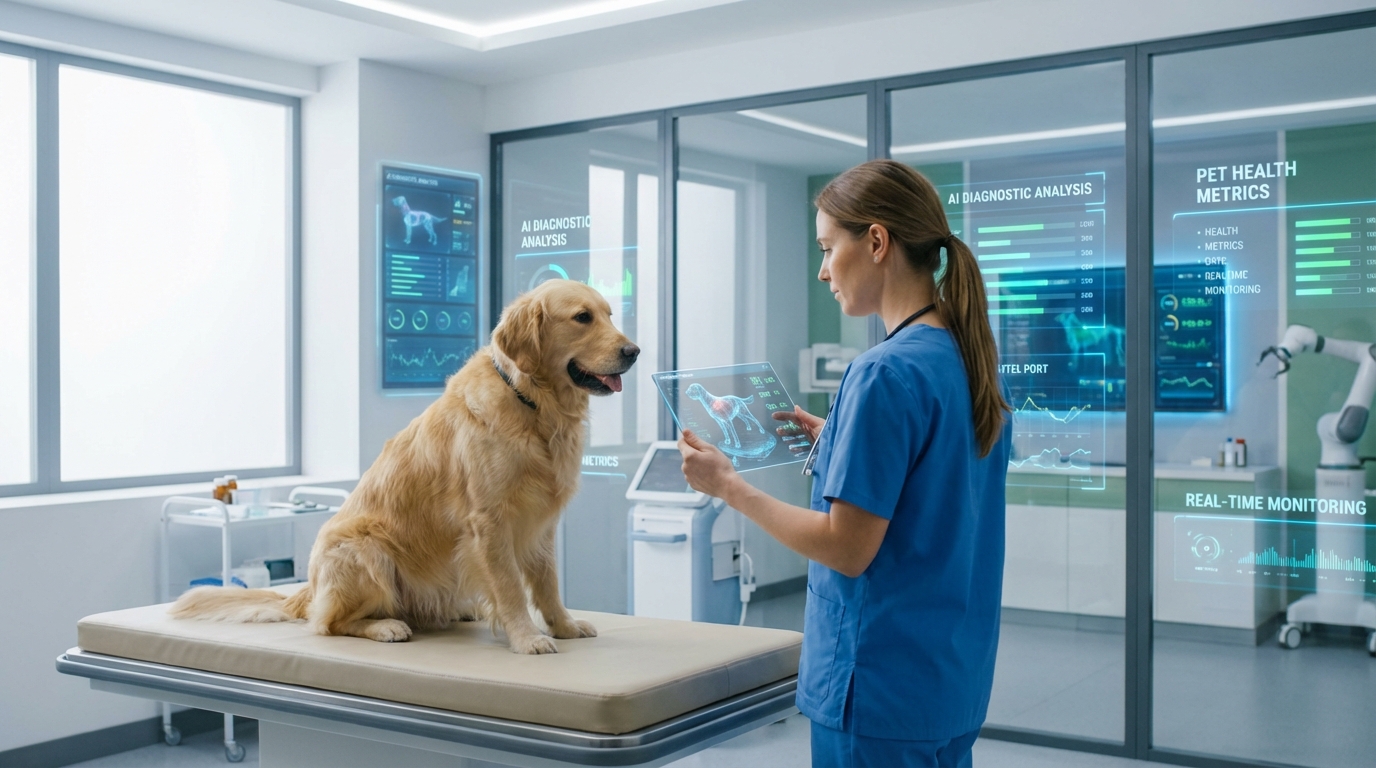
Forward-thinking veterinary practices that embrace AI now will gain competitive advantages in efficiency, client satisfaction, and profitability that will compound over time. Those that wait will find themselves struggling to catch up.
The Current Reality: Where Small and Mid-Size Practices Stand
Small and medium-sized veterinary practices face unique challenges that make AI adoption both critical and complex:
Administrative Burden: Documentation consuming 60% of your day
Staff Burnout: Team exhaustion from repetitive documentation tasks
Revenue Leakage: Thousands lost from missed charges and unbilled services
Communication Gaps: Client follow-up issues leading to compliance problems
1. AI Medical Documentation & SOAP Notes
The most immediate impact: AI can reduce documentation time by 60% while improving accuracy. Tools like ScribbleVet, CoVet, and HappyDoc listen to your consultations and automatically generate properly formatted SOAP notes in real-time.
What this means for your practice: Veterinarians can focus on patients instead of paperwork, eliminate after-hours documentation, and ensure consistent, comprehensive medical records that improve patient care and reduce liability.
2. Intelligent Appointment Scheduling & Patient Flow
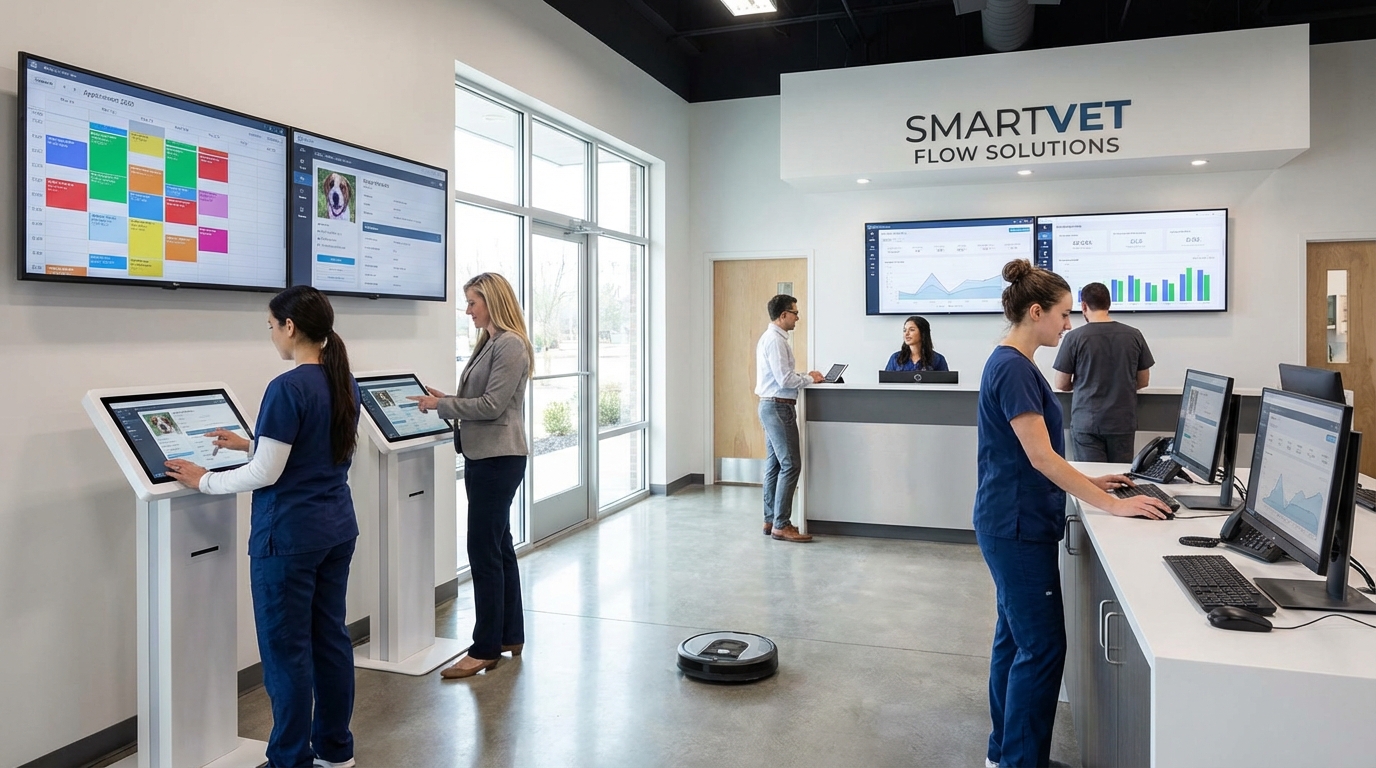
AI scheduling tools like Anolla and ClinicWise can resolve up to 79% of scheduling inquiries automatically, 24/7 in multiple languages. They predict optimal appointment times based on pet health histories and client preferences.
What this means for your practice: Save 8-10 hours of administrative time per week, reduce no-shows through smart scheduling, and provide round-the-clock booking convenience that clients expect.
3. Clinical Decision Support Systems
AI assistants analyze patient symptoms, signalment, and medical history to suggest differential diagnoses, calculate medication dosages, and flag potential treatment risks—all while keeping the veterinarian in control of final decisions.
What this means for your practice: Reduce diagnostic errors, improve treatment consistency, and provide an extra layer of clinical safety that enhances patient outcomes and builds client confidence.
4. AI-Enhanced Diagnostic Imaging
AI-powered imaging analysis helps identify abnormalities in radiographs, CT scans, and MRIs that might be missed by the human eye, especially during busy days or late-night emergencies.
What this means for your practice: Maintain diagnostic consistency regardless of clinic volume or staff fatigue, catch subtle abnormalities earlier, and provide confidence scores that support your clinical judgment.
5. Automated Client Communication & Follow-up
AI can generate personalized discharge instructions, treatment summaries, and follow-up reminders in plain language that clients actually understand, while automating routine communications like appointment reminders and medication refill notifications.
What this means for your practice: Improve client compliance, reduce callback volume, strengthen the human-animal bond through better education, and free up staff for higher-value interactions.
6. Revenue Recovery & Charge Capture
AI reviews medical records and identifies treatments, diagnostics, or products mentioned during appointments that weren't captured on invoices—addressing one of the most common sources of lost revenue in veterinary practices.
What this means for your practice: Recover thousands in previously missed charges, ensure consistent billing practices, and optimize service recommendations based on data-driven insights.
7. Intelligent Teletriage & Remote Care
AI-powered teletriage platforms standardize symptom assessment and help both clients and staff make informed decisions about appointment urgency, transforming chaotic emergency calls into structured patient assessments.
What this means for your practice: Reduce unnecessary emergency visits, optimize appointment scheduling based on actual urgency, and provide better access to care for routine follow-ups and consultations.
8. Practice Analytics & Operational Intelligence
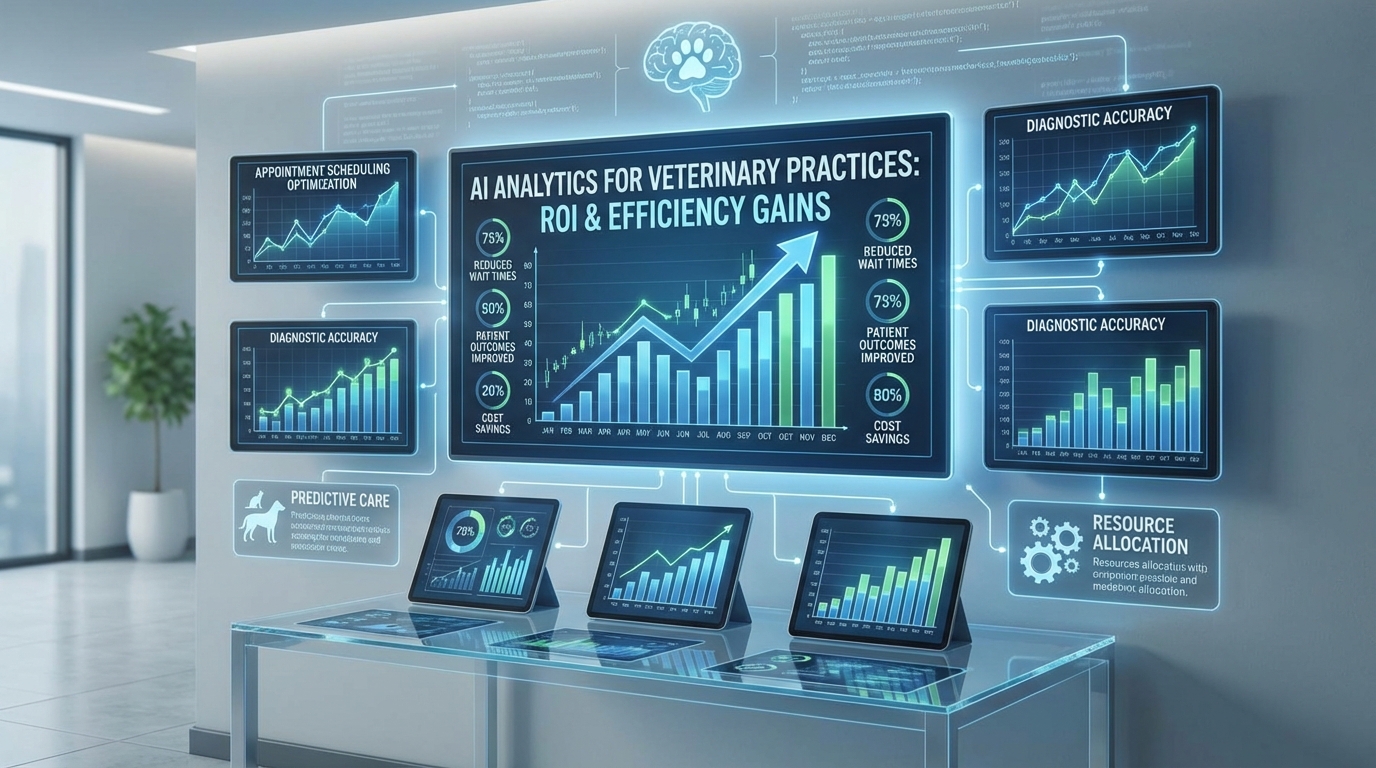
AI analyzes appointment flow, revenue patterns, service utilization, and inventory trends to identify operational blind spots and optimization opportunities that human analysis might miss.
What this means for your practice: Make data-driven decisions about staffing, inventory, service offerings, and resource allocation that directly impact profitability and efficiency.
The Implementation Reality: Why Most Practices Fail
While the benefits are clear, 70.3% of veterinary professionals cite reliability and accuracy concerns as their biggest barrier to AI adoption. Another 53.9% worry about data security and privacy.
The truth is, most practices try to implement AI tools in isolation without a strategic approach. Organizations that treat AI as 'just another tool' struggle with fragmented adoption, compliance issues, and unrealized ROI.
Successful implementation requires:
Strategic Integration: Planning tailored to your practice workflow
Change Management: Proper staff training and adoption support
System Integration: Seamless connection with existing practice management systems
Ongoing Optimization: Continuous monitoring and performance improvement
The ROI is Real: What Early Adopters Are Seeing
Small and medium practices implementing AI strategically report:
60% reduction in documentation time
8-10 hours saved per week on administrative tasks
Thousands in recovered revenue from improved charge capture
Improved staff satisfaction and reduced burnout
Enhanced client satisfaction through better communication
For smaller clinics, the impact is even more pronounced—a few hours saved per week makes a massive difference in work-life balance, and even basic tools can offset subscription costs within the first month.
Your Next Steps: From Awareness to Implementation
The window of competitive advantage is narrowing. While 83% of practices know about AI, only 30% are using it effectively. That gap won't last long.
The practices that implement AI strategically now will have 2-3 years of operational advantages before AI becomes table stakes. Those advantages compound over time—better efficiency leads to higher profitability, which enables more investment in technology and staff, creating a virtuous cycle.
Ready to transform your practice with AI? I specialize in helping small and medium veterinary practices implement these technologies strategically, avoiding the common pitfalls that lead to wasted time and money.
Let's have a 15-minute conversation about which of these 8 AI use cases would deliver the biggest impact for your specific practice. No sales pitch—just a strategic discussion about your current challenges and how AI can solve them.
Comments